NESA is dedicated to advancing education and quality service provision in the employment and related services sector and improving social or public welfare through the wellbeing of unemployed, disadvantaged, and marginalised people. Our priority is assisting them in overcoming barriers to economic and social participation, with particular emphasis on those who are most disadvantaged.
Established in 1997, NESA leads the sector through the delivery of intensive policy, operational and capacity building support to position programs and service delivery to best respond to needs and aspirations of economically and socially disadvantaged Australians.
NESA represents the diversity of organisations across the sector, including not-for-profit, for-profit and public organisations delivering the full suite of Australian government employment assistance programs, and community services.
Copies of our policy papers and submissions to government inquiries
More information →
Information regarding our advocacy and stakeholder engagement activities
More information →
Provides timely information about sector-relevant events as they arise - conferences, forums and retreats
More information →
Formal education, training programs, workshops, seminars, and self-managed learning
More information →
Presenting members with high quality practical services and product options that support business and operations
More information →
Information regarding our biennial Employment Services Workforce Survey
More information →
Consulting and capacity building projects that complement our member services and advocacy
More information →
Expert advisors who work alongside governments and organisations providing advisory services in policy design and implementation
More information →


For 50 years, policy has focused on building the skills of jobseekers with disability. Yet, far less attention has gone to the other side of the equation: namely, why employers don’t hire, and what would help them to.
Reaching parity by 2050 means at least doubling the current rate of job creation. So what would something different look like?
In his first blog for NESA NEXT, Cain Beckett sets out where he thinks the focus needs to shift, and the industry-led program NESA is building to get there.
NESA’s submission to the Department of Employment and Workplace Relations provides recommendations for the future design and implementation of Australia’s employment services system.
Drawing on evidence and the experience of employment services providers, it addresses what should be prioritised under the reforms, including service delivery, assessment, funding, employer engagement, workforce capability, commissioning and key issues for consideration during a staged implementation for reform.
As Australia considers the most significant employment services reform in a generation, a major question looms. Should people receiving support through proposed Streams 2 and 3 be required to change providers as their circumstances change, or should support remain with a single provider or coordinated consortium across both streams?
In this NESA Policy Insights Paper, we examine the evidence relating to continuity of support, service fragmentation, employment outcomes, provider transitions, and the risks and benefits of different commissioning approaches.
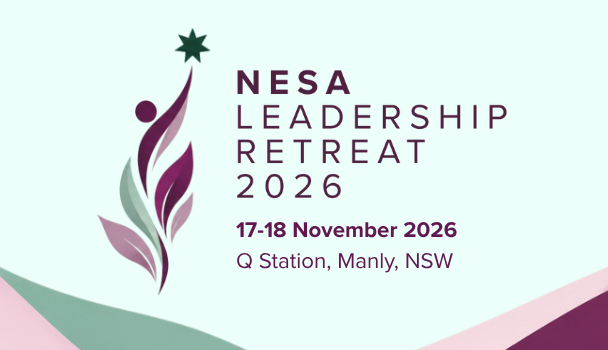
An exclusive two-day event designed for CEOs, Senior Executives and Managers in the employment and related services sectors. This retreat provides an immersive opportunity to explore your personal leadership style and motivation, navigate uncertainty and ambiguity with confidence, and grow your self-awareness and EQ.
NESA MEMBERS DELIVER A BROAD RANGE OF EMPLOYMENT PROGRAMS
Employment services currently includes three major programs – Workforce Australia, Disability Employment Services which supports people with disability and the Community Development Program which supports people in remote Australia.
The major employment services are supported by a range of complementary programs which provide more specialised and targeted support for cohort groups such as ParentsNext – working with parents returning to the workforce, Transition to Work – a youth focussed program, Career Transition Assistance – supporting mature aged participants, Self Employment Assistance – supporting people interested in starting their own business or refocusing an existing small business, and State based programs. These programs operate alongside the major programs.