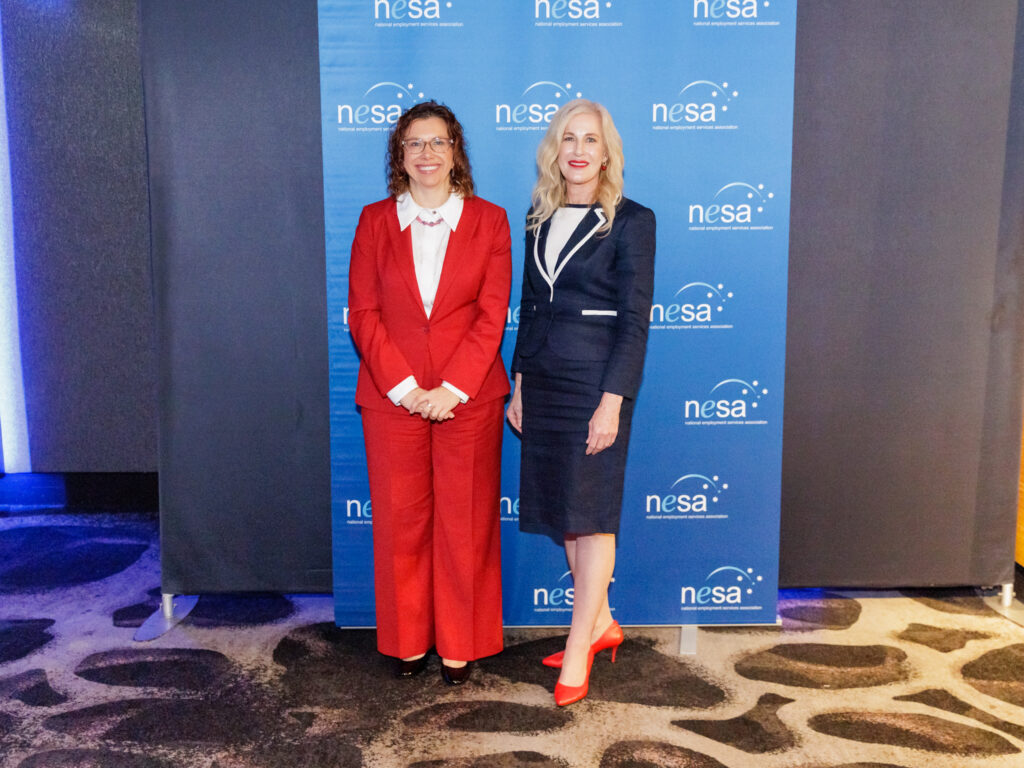
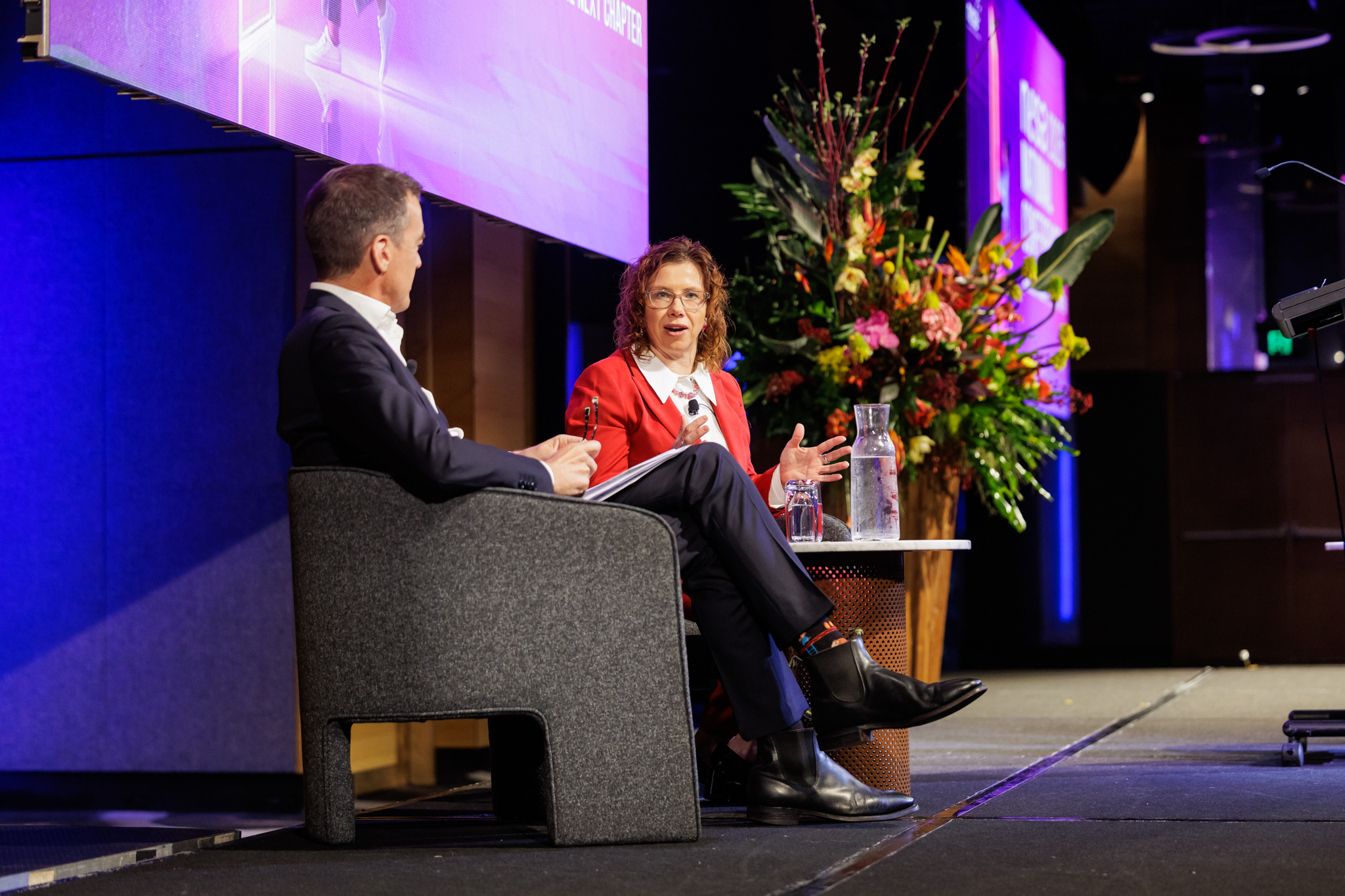
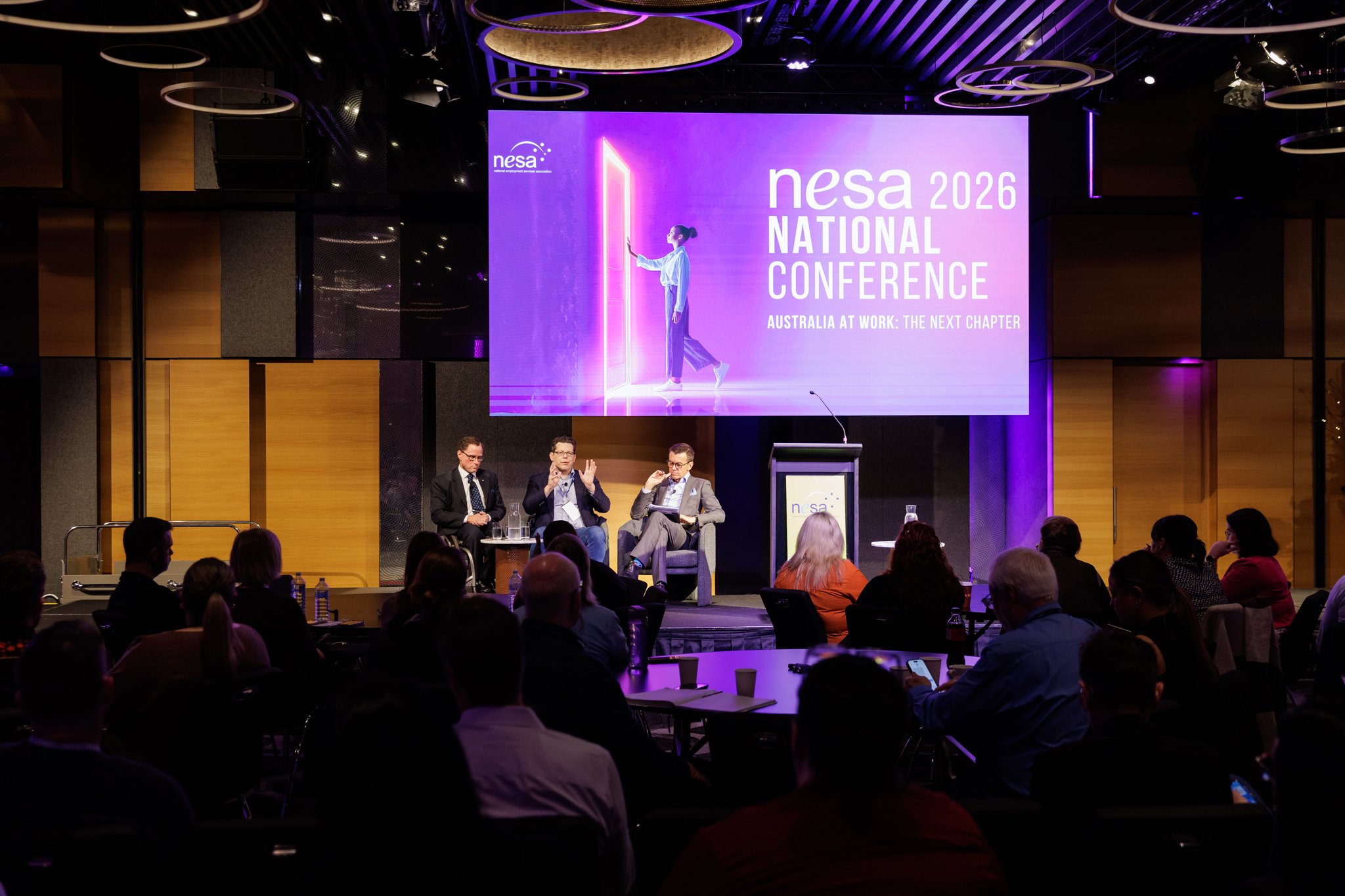
NESA Chief Executive Officer Kathryn Mandla’s strong message to the sector was a call to look outward and forward, to meet reform with evidence, ambition and a steady focus on the people we serve.
▶ Read Kathryn Mandla’s opening address
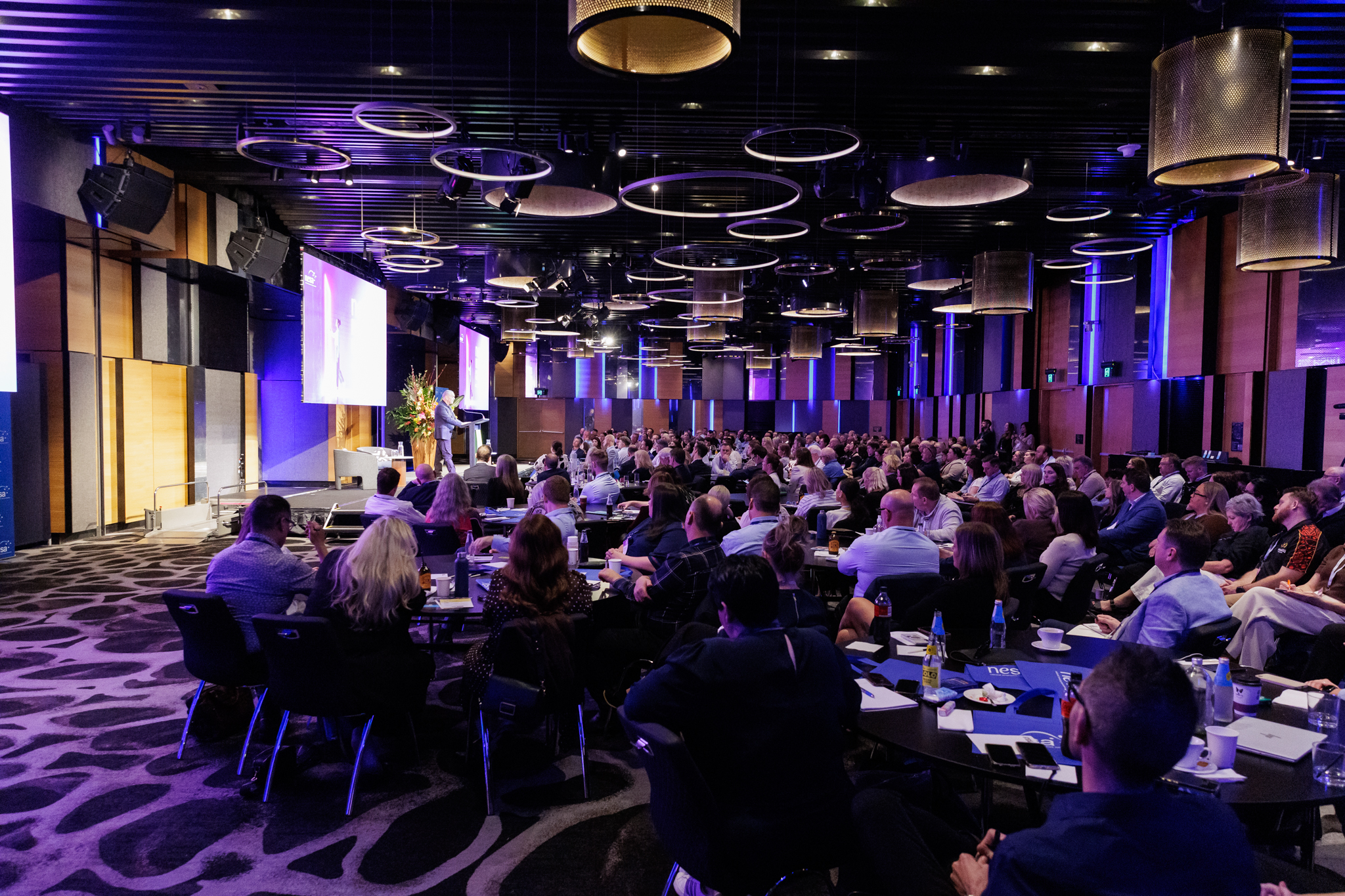
Across both days the program was expertly guided by our Master of Ceremonies, Michael Rowland, whose journalistic skills in drawing out speakers, carrying questions through from the floor and keeping a complex program moving made the conference seamless.
Government, policy and the road ahead
We were also delighted to welcome the Hon. Amanda Rishworth MP, who addressed delegates on employment services and the reform agenda. Hearing directly from the Minister on the Government’s priorities, and on the road ahead for the sector, was a highlight of the conference and a valuable opportunity for members to understand the thinking shaping the reforms.
▶ Read the Minister’s speech
Zoe McKenzie MP, Shadow Assistant Minister for Employment and Industrial Relations, also joined us, underlining the bipartisan interest in getting employment services right. The opportunity to hear perspectives from across the Parliament in a single program is one delegates told us they valued enormously.
Simon Duggan, Secretary of the Department of Employment and Workplace Relations, and Matt Flavel, Deputy Secretary at the Department of Social Services, both brought senior departmental perspective to the program, while Cath Pou (DSS) took delegates through Inclusive Employment Australia and Bruce Cunningham (DEWR) led a workshop on designing reform with provider experience in mind, a session that spoke directly to something our members care deeply about.
In a lively question and answer session, Professor Alex Robson of the Productivity Commission and Geoff Trappett from the Achieve Foundation, both challenged the room to rethink the demand side of employment, bringing rigour and candour to a discussion about where the real levers for change might sit. Matthew McLean’s session on moving from advocacy to impact gave delegates practical strategies for influencing future policy, and Dr Marion Byrne and Bryan McCormick helped lead a frank and wide-ranging interactive discussion on key issues to be addressed under the employment services reform.
Technology, AI and the future of employment services
Few sessions generated as much conversation as the fireside chat with Professor Toby Walsh on artificial intelligence and the future of employment services. Characteristically candid, he pressed the room to think not only about what AI could look like in our sector, but what it should look like, and left delegates both better informed and more confident about engaging with the technology in their own organisations.
Joanna Barrack complemented that conversation with hard-won lessons from the United Kingdom, showing how AI is being used responsibly to help more people into work, faster. Together, the two sessions moved the discussion beyond speculation and into practical, ethical territory.
Rethinking the demand side
A powerful thread ran through the program: that too much of our attention has historically sat with job seekers, and not enough with employers and the systems around them.
Geoff Trappett of The Achieve Foundation put that case compellingly in relation to the employment of people with disability, challenging delegates to confront the barriers that sit on the demand side. Dr Jenny Crosbie brought the evidence on what actually works in employment supports for people with disability, and Brendon Eglinton of Australian Spatial Analytics showed what becomes possible when pathways are designed around people’s strengths, sharing what agencies need to know about placing autistic talent in technology roles.
Backing young people
Professor Eóin Killackey addressed the mental health and wellbeing of young job seekers with a rare combination of evidence, compassion and practicality, giving frontline practitioners both deeper understanding and concrete ideas to take home.
Dr Chris Sarra delivered one of the most talked-about sessions of the conference, speaking about young people and First Nations youth, and about the difference it makes when we hold high expectations and genuinely believe in the young people we work with. Nic Dyson of Future Anything also brought her infectious energy and sharp intellect to a discussion on the future of education and the opportunities ahead for young Australians.
Evidence, practice and person-centred design
Dr Alex Gyani offered a fresh and rigorous lens on the sector, drawing on international and domestic research to show how behavioural science and systems thinking can transform employment services, and how change actually happens in complex systems.
Olivia Burton and Ria Thornton shared the System2 research into designing the future of a person-centred employment system, grounding a bold vision in solid evidence and the experiences of the people the system exists to serve.
Two sessions dealt with trauma with particular care and skill. Professor Patrick O’Leary and Craig Hughes-Cashmore explored supporting survivors of sexual abuse into employment, while Dr Emily Corbett, Associate Professor Michael McGann and Emily Roy examined what it means to deliver employment services in a trauma-informed way, and what that implies for frontline practice and system reform. Delegates described both as sessions that will change how they work.
An international lens
Akosua Alagaratnam of First Work Ontario travelled to join us and shared lessons from Canada’s employment services system. Her session was a valuable reminder that many of our challenges are shared, and that there is much to learn from how others have approached them.
Leadership, culture and workforce
One of the standout sessions of the conference was the panel asking a deceptively simple question: what does resilient leadership look like? Balendran Thavarajah, Carmel Mulhern, Poul Bottern and Amanda Mather spoke openly about the realities of leading through uncertainty and change, and delegates left describing the conversation as honest, practical and quietly reassuring.
Craig Doyle of Parkhouse Bell tackled one of the most pressing challenges facing our members, future-proofing our workforces, with strategies for recruitment and retention in an uncertain world, while Mike Symonds shared the 7000 Voice Blueprint, a compelling demonstration of what organisations can achieve when they genuinely listen to their people and act on what they hear.
The value of coming together
For all the strength of the program, delegates told us that something else mattered just as much: the simple, considerable value of being in the same room.
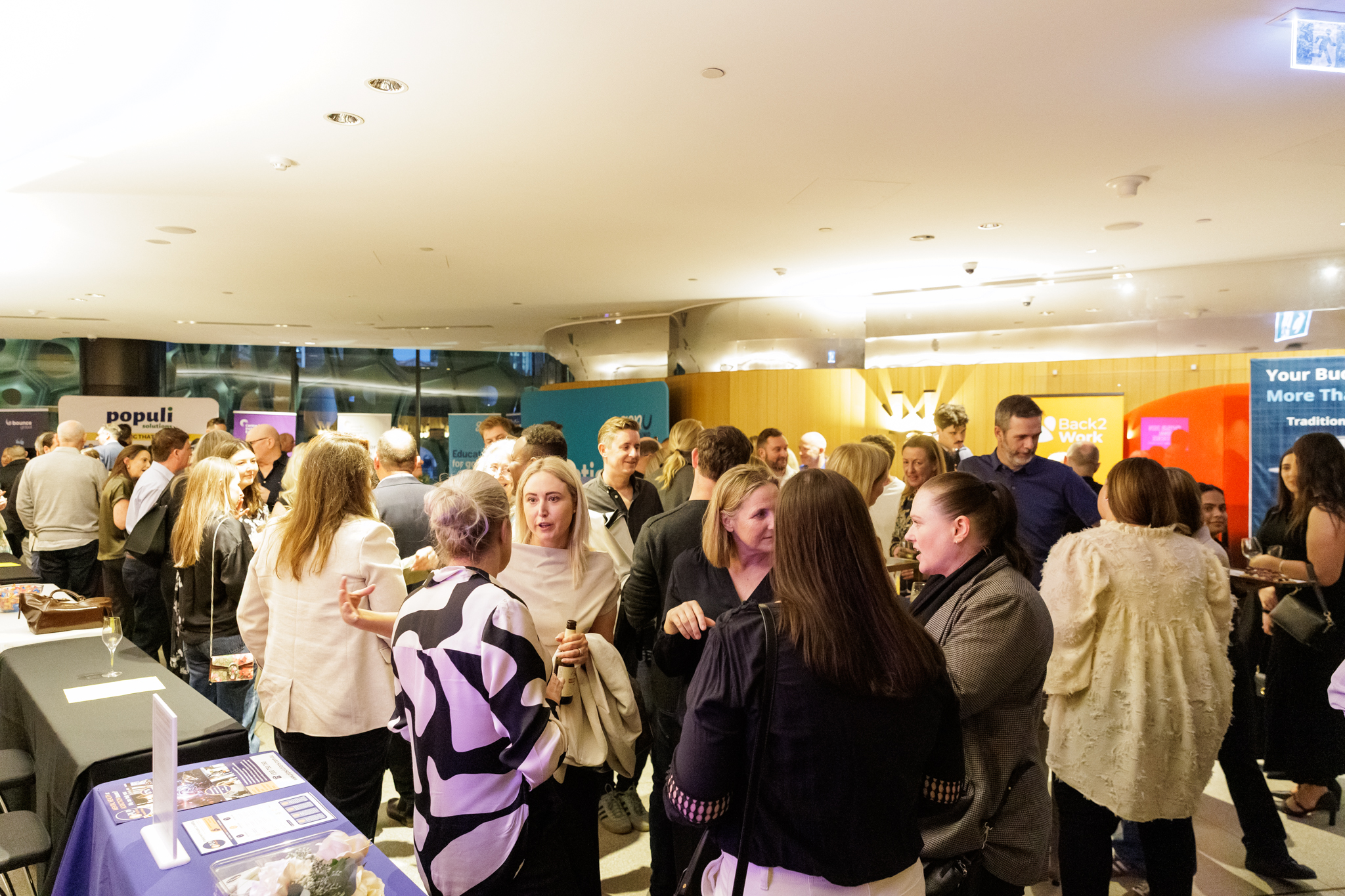
Employment services is demanding work, and it is often done at a distance, in local offices, in communities, alongside people at difficult moments in their lives. Our national conference is one of the few times each year that the professionals doing that work can look around and see the scale of what they are part of. The conversations over coffee, the reconnections in the exhibition space, the comparing of notes between organisations that might otherwise never meet, these are not the margins of a conference. For many, they are the point.
Australia at Work reaffirmed that this is a sector with real depth of expertise, genuine care for the people it serves, and a shared appetite for doing things better. That collective confidence matters enormously as reform continues.
Thank you
Our sincere thanks go to every speaker, panellist and workshop presenter who gave their time and expertise so generously; to our sponsors and exhibitors, whose support makes the conference possible; and above all to the delegates who travelled from across the country to be part of it.
We look forward to welcoming you again at the next NESA National Conference. Details will be announced on the NESA website in the coming months.